Service 08 / 10
Smart-Home Wiring

How we approach it
Wiring the home will grow into.
Smart-home systems still depend on sound electrical infrastructure. We coordinate device locations, power, low-voltage pathways, and controls so the technology feels integrated instead of improvised.
When to call
Plan the wiring before the devices arrive.
Smart switches will not fit because the boxes have no neutral.
Wi-Fi coverage drops off in the rooms furthest from the router.
An integrator has been hired and needs the electrical side coordinated.
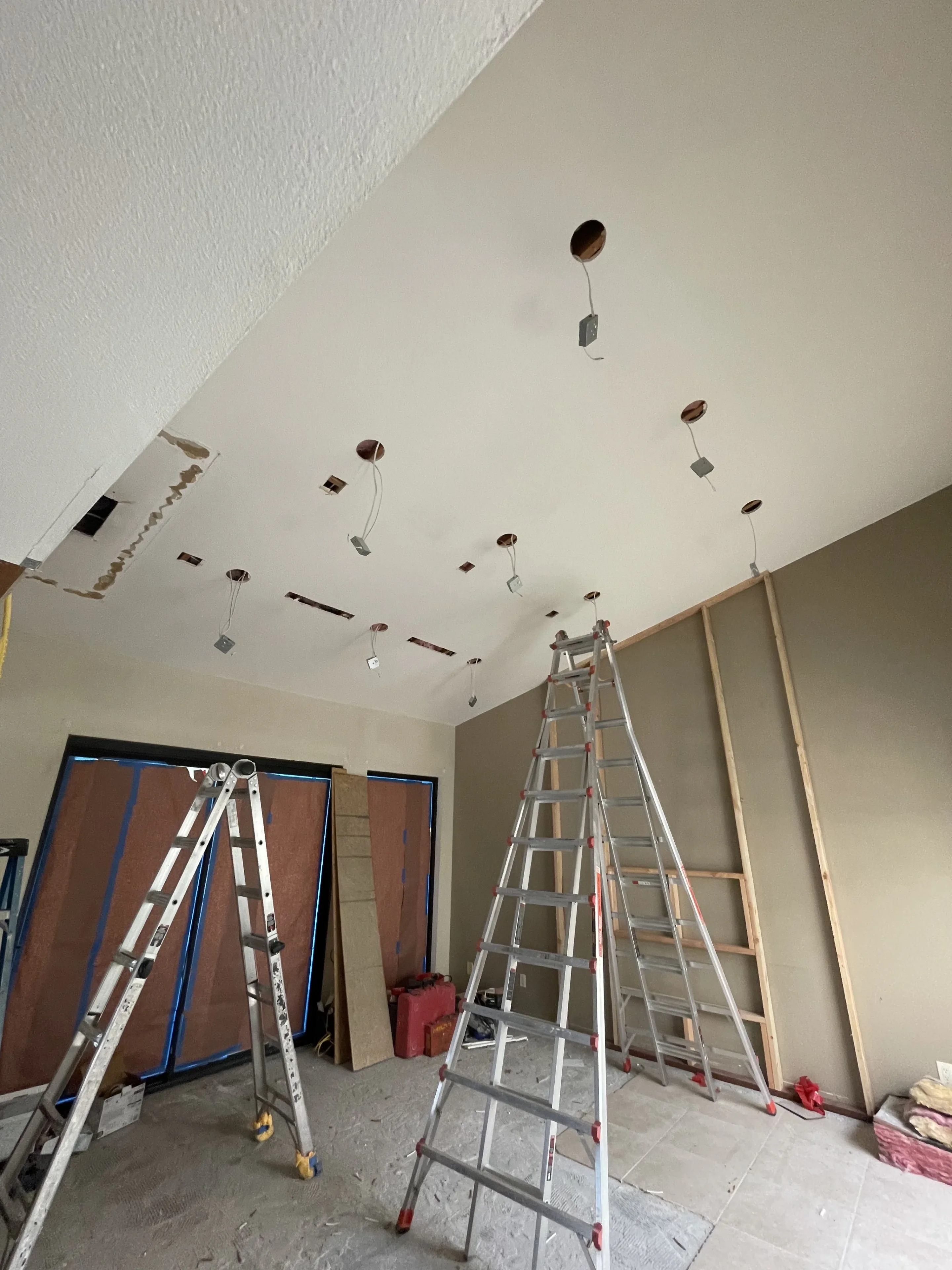
The house is being built or gutted and the pathways are still open.
Typical scope
The scope, line by line.
- 01
- Control-ready lighting wiring
Neutrals at every switch box, loads grouped by scene rather than by wall, and keypad locations set with the designer.
- 02
- Dedicated circuits for equipment
Clean power for racks, network gear, AV equipment, and gate or garage controllers, kept off shared lighting circuits.
- 03
- Structured pathways for future devices
Conduit and pull strings to cameras, access points, shades, and exterior locations so later additions do not mean drywall repair.
- 04
- Network and power location planning
Rack, panel, and access-point placement chosen for heat, coverage, and serviceability instead of leftover closet space.
- 05
- Whole-home and room-by-room coordination
Work scoped as a full system or one room at a time, depending on the budget and how the project is phased.
- 06
- Remodel and new-construction support
Rough-in coordinated with the integrator, builder, and low-voltage trades so nobody is guessing at the walkthrough.
How the work runs
Four steps, every time.
The scope changes from job to job. The sequence does not, so you always know what happens next and what it depends on.
- Map how the home is used
Entries, paths, and evening routines determine which loads should be controllable and from where.
- Coordinate with the integrator
Device counts, keypad locations, rack space, and pathway needs are settled while walls are still open.
- Rough in with headroom
Neutrals, spare conduit, and pull strings go in during rough so future devices are a swap instead of a project.
- Trim and verify
Loads are terminated, keypads are labeled, and everything is tested with the control system before handoff.
The V12 approach
A smart home works better when the wiring was considered before the devices arrived.Plan Your Project
Smart home answers
Questions about smart-home wiring.
What should be planned before installing smart-home devices?
Plan device locations, reliable power, neutral requirements, control wiring, network locations, equipment space, low-voltage pathways, and how the system may expand.
Can smart-home wiring be added during a remodel?
Yes. A remodel is a useful time to add power, control-ready wiring, and structured pathways while wall and ceiling access is available.
Does smart-home equipment still need conventional electrical planning?
Yes. Smart devices still depend on safe circuits, suitable boxes, correct controls, reliable power, and an electrical system with appropriate capacity.
Do smart switches need a neutral wire?
Most do. Older homes often have switch loops without a neutral, which is why the box condition is confirmed before devices are selected.
Do you install the devices, or only the wiring?
Both are possible. V12 Electric can install and connect the devices, or provide the electrical infrastructure for an integrator to commission the system.
Tell us what is going on.
Call or text about a repair, an upgrade, a lighting project, or something you are planning.